
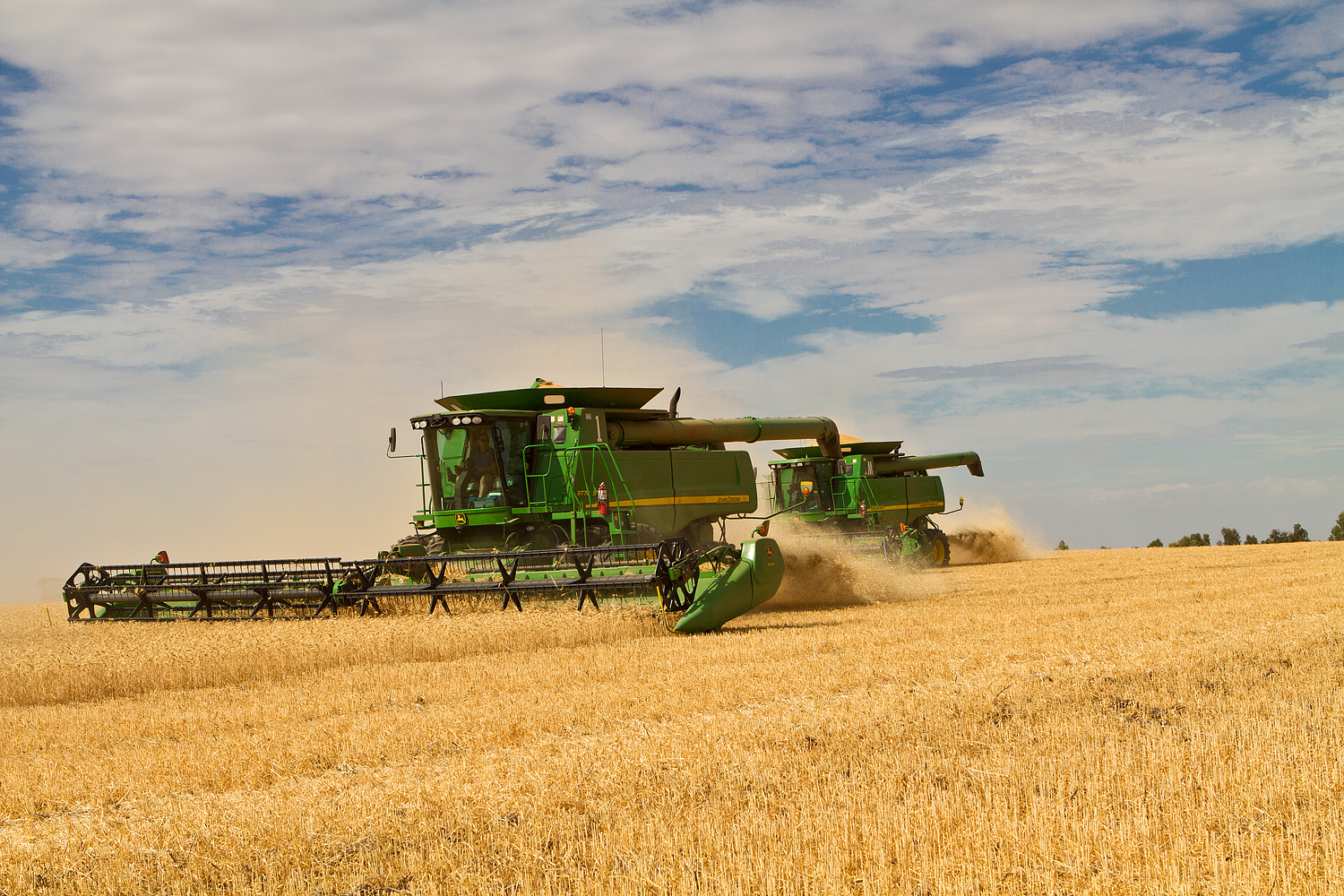
Most farmers blame ground speed or crop conditions when grain loss climbs. The concave sitting inside the rotor housing is usually the bigger factor — and it’s the one almost nobody checks first.
Every bushel that exits the back of a combine instead of landing in the tank is a bushel that’s already been grown, fertilized, and paid for. That makes grain loss one of the most expensive problems in farming — and one of the least visible, since most of it happens inside the rotor housing where nobody’s watching.
The concave is the single largest controllable variable in that equation. Concave type determines how aggressively the rotor threshes the crop, how much of the loosened grain actually escapes through the concave openings before reaching the back of the machine, and how much grain rides out with the residue as rotor loss. Get the concave wrong for the crop and conditions, and no amount of careful driving will fix it.
This breakdown covers how each major concave style performs on rotor loss, why standard configurations force farmers into a speed-versus-loss trade-off, and what a true zero-loss benchmark actually requires from the threshing system.
What a Concave Actually Does Inside a Rotor Combine
Inside a rotor combine, the threshing rotor spins crop material against a curved, perforated surface called the concave. Rasp bars mounted on the rotor strike and rub the crop against the concave’s bars or wires, and that impact and friction knock grain loose from the cob, pod, or head. Loosened grain and small chaff fall through the concave openings onto the grain pan below, while stalks, cobs, and larger residue continue rearward toward the separation grate and out the back of the machine.
That single mechanism — strike, rub, fall through — determines almost everything about harvest performance. If the concave’s openings, bar spacing, and surface profile aren’t matched to the crop, one of two problems shows up:
- Grain stays trapped in the crop mat. If the mat of stalks and residue wraps tightly around the rotor instead of staying loose, grain that’s already been knocked free gets carried out the back with the residue instead of falling through the concave. This is rotor loss, and it’s invisible from the cab.
- Grain gets damaged before it ever falls through. Concaves that thresh too aggressively for the crop crack kernels, split soybeans, or dehull edible beans. That grain technically makes it to the tank, but it shows up as dockage, lower test weight, or rejected loads at the elevator.
Concave type is what determines which of these failure modes a farm experiences — and how much of each.
The Main Concave Types and How They Handle Grain Loss
Combine concaves generally fall into a handful of categories, each built around a different threshing philosophy. Understanding the trade-offs in each one explains why so many operations end up swapping concaves multiple times per season.
Small Wire Concaves
Small wire concaves use tightly spaced wires running perpendicular to heavy cross bars, built specifically for small grains like wheat, barley, and oats. The tight spacing does effectively all of the threshing and most of the separation before material ever reaches the separator. The trade-off is that this same tight spacing is too aggressive for corn or soybeans — it increases splits and cracked kernels on larger grain, which is why most farms maintain a separate small grain concave set rather than running it year-round.
Large Wire and Round Bar Concaves
Wide-wire and round bar concaves use larger spacing and a smoother profile, designed for corn and soybeans. Round bars in particular reduce grain damage on larger kernels because the crop slides off the smooth, curved edge rather than getting pinched against a square edge. The drawback shows up at the other end of the spectrum: round bars need more rotor speed and aggression to fully thresh the crop, and that extra mechanical work raises the risk of rotor loss in tougher or higher-moisture material, since the crop mat has to be driven harder to release the grain.
Helical Bar Concaves
Helical bar concaves angle the crossbars diagonally so incoming material strikes the bar at closer to a right angle. This produces more aggressive threshing and is typically run in the front concave position when small grains or other hard-threshing crops need extra help releasing grain from the head. Because of the increased aggression, helical bars are usually paired with gentler concaves further back rather than run through the entire threshing chamber.
Square-Edged and Combination Bars
Square-edged bars thresh aggressively and efficiently but are prone to plugging when material is wet or green, since there’s no smooth surface for damp crop to slide across. A bar profile that combines a square threshing edge with a rounded trailing surface attempts to capture the threshing efficiency of a square edge while retaining the anti-plugging behavior of a round bar — which is the design logic behind patented bar concaves like the XPR3.
Separation Grates
The concave only handles threshing and initial separation. What happens after the crop mat passes the concave — at the separation grate — determines how much of the grain that’s already been knocked loose actually escapes before exiting the machine. Standard wire or finger grates allow the crop mat to wrap tightly around the rotor tube, which traps already-free grain inside the mat and carries it out the back as rotor loss. Grate designs built to keep the crop mat suspended rather than compacted, sometimes called extreme separation grates, give that loosened grain a continuous opportunity to fall through rather than getting trapped against the rotor tube.
Comparing Concave Types on Grain Loss Performance
| Concave Type | Rotor Loss Tendency | Grain Damage Risk | Best Suited For | Crop Switching Required |
|---|---|---|---|---|
| Small Wire | Low in small grains; high if used on corn or beans | High on corn/soybeans | Wheat, barley, oats | Yes — must swap for row crops |
| Round Bar | Moderate to high in tough or wet material | Low to moderate | Corn, soybeans | Yes — must swap for small grains |
| Helical Bar | Low (front position only) | Moderate | Hard-threshing small grains | Typically paired, not run alone |
| Square-Edged | Low when dry; high if material plugs | Moderate to high | Dry, mature crop | Often, due to plugging in wet conditions |
| Patented All-Crop Bar (XPR3) | Near zero across crop types | Low | Corn, soybeans, wheat, and other crops without reconfiguration | No — engineered for all crops |
The Speed-Versus-Loss Trade-Off Most Concaves Force
Here’s the trade-off that defines harvest for most operations running standard concaves: pushing more material through the rotor faster increases throughput, but it also increases the volume of crop competing for the same threshing and separation surface area. With a fixed amount of effective threshing surface, faster ground speed means less time and less contact area per unit of crop — which means more grain escapes uncaptured.
This forces a choice every harvest season. Slow down to protect your loss numbers, and acres-per-day drops along with the harvest window. Push ground speed to beat weather or finish faster, and rotor loss climbs, often invisibly, until someone checks behind the combine.
The way out of that trade-off isn’t driver discipline — it’s increasing the threshing surface area and separation efficiency of the concave system itself. The XPR3 concave system, for example, is built with 135% more effective threshing surface area than stock round bars, paired with an Xtreme Separation Grate engineered to keep the crop mat suspended rather than compacted. That combination is what allows ground speed gains of 1 to 3 mph while holding rotor loss near zero, rather than trading one for the other.
What Zero Grain Loss Actually Costs Farms That Don’t Have It
“Zero grain loss” sounds like a marketing phrase until you run the math on what standard rotor loss actually costs at scale. A combine running OEM round bar or wire concaves at typical harvest speeds commonly loses 2 to 5 bushels per acre to rotor loss. On a 1,000-acre operation, that range adds up to roughly $30,000 in lost revenue in a single season at typical commodity pricing — and that number doesn’t include the volunteer crop pressure that uncaptured grain creates the following spring, or the dockage losses from grain damage stacked on top of what’s already missing from the tank.
Field testing on the XPR3 system has shown rotor loss dropping to as few as two kernels found during post-harvest checks — a result made possible by combining a 135% threshing surface area increase with a 143-disrupter-finger separation grate designed specifically to interrupt the crop mat and give trapped grain a path to fall through before it exits the machine.
Key Takeaways
- Concave type controls two separate failure modes — grain that stays trapped in the crop mat (rotor loss) and grain that’s damaged during threshing (dockage) — and most farms only watch for one of them.
- Standard wire and round bar concaves force a trade-off between crop versatility and rotor loss, which is why most operations swap concaves between wheat, corn, and soybeans.
- The separation grate, not just the front concave, is where most invisible rotor loss actually happens — a crop mat that wraps tightly around the rotor traps grain that’s already been knocked free.
- Increasing effective threshing surface area and redesigning the separation grate breaks the speed-versus-loss trade-off, allowing higher ground speed without higher rotor loss.
- At typical OEM rotor loss rates of 2 to 5 bushels per acre, a 1,000-acre farm is leaving roughly $30,000 on the ground every season before dockage losses are even factored in.
Common Mistakes Farmers Make When Diagnosing Grain Loss
- Blaming ground speed first. Slowing down treats the symptom, not the cause. If the concave and grate can’t separate grain fast enough at any reasonable speed, the loss problem will return as soon as conditions get tougher.
- Only checking behind the combine, not inside it. A quick walk-behind check catches rotor loss after the fact. It doesn’t explain whether the loss is coming from the front concave, the rear concave, or the separation grate — which means the wrong component often gets adjusted.
- Adjusting concave clearance instead of addressing the root design. Tightening clearance can mask a grain loss problem temporarily, but it often increases grain damage in the process. If the concave itself doesn’t match the crop and conditions, clearance adjustments are a workaround, not a fix.
- Treating all rotor loss as unavoidable. Some operations accept 2 to 5 bushels per acre as “normal” because that’s what their OEM concaves have always delivered. It’s normal for that configuration — not a physical limit of the rotor combine itself.
- Ignoring the separation grate during a concave upgrade. Upgrading only the front concave while leaving a standard wire or finger grate in place leaves the trapped-grain failure mode completely unaddressed, since that’s where a large share of invisible rotor loss actually occurs.
Frequently Asked Questions
What concave type causes the least grain loss in a rotor combine?
Concaves built around a patented threshing bar with an integrated separation grate, like the Estes XPR3 system, cause the least grain loss because they combine higher threshing surface area with a grate design that keeps the crop mat suspended instead of compacted against the rotor tube. Standard round bar and wire concaves rely on tighter clearances to compensate, which increases damage and rotor loss as ground speed climbs.
How much grain does a standard concave lose per acre?
A combine running OEM round bar or wire concaves at typical harvest speeds commonly loses 2 to 5 bushels per acre to rotor loss. On a 1,000-acre soybean operation, that range translates to roughly $30,000 in lost revenue at typical commodity prices, before accounting for the volunteer crop pressure that uncaptured grain creates the following season.
Does concave type affect grain quality as well as grain loss?
Yes. Concave type controls both how much grain escapes the rotor and how much of the grain that is captured gets cracked, split, or dehulled in the process. Square-edged bars thresh aggressively but can damage grain and plug on wet material. Round bars resist plugging but need more rotor speed to thresh fully, which raises mechanical stress on the kernel. A patented bar profile that blends both edge types reduces grain damage while maintaining threshing force.
Do I need different concaves for corn, soybeans, and wheat?
With OEM and most aftermarket concave systems, yes. Wheat and other small grains typically call for tighter wire or round bar configurations, while corn and soybeans need wider spacing and gentler threshing to avoid splits. This is why many farms swap covers, bands, or entire concave sets between crops. All-crop concave systems like the XPR3 are engineered to thresh corn, soybeans, wheat, and a wide range of other crops without reconfiguration, removing that downtime from the harvest schedule.
Can upgrading concaves reduce rotor loss without slowing down the combine?
Yes, and this is the core trade-off that concave design controls. OEM concaves often force a choice between ground speed and grain loss, since pushing more material through the rotor faster increases the volume that escapes uncaptured. A higher-capacity concave and grate combination processes more material per pass, which allows ground speed increases of 1 to 3 mph while holding rotor loss near zero, rather than trading speed for loss.
Conclusion
Grain loss in a rotor combine isn’t primarily a driving problem or a weather problem — it’s a concave problem. Every concave style makes a deliberate trade-off between threshing aggression, grain damage, and how well the crop mat releases grain before exiting the machine, and standard OEM configurations were never designed to eliminate that trade-off entirely. They were designed to manage it crop by crop, which is why so many operations are stuck swapping concaves and accepting a few bushels per acre as the cost of doing business.
That cost is avoidable. A concave and separation grate system engineered for higher threshing surface area and true all-crop versatility removes the need to choose between speed and yield, and turns a “normal” 2 to 5 bushel per acre shortfall into a problem that’s actually solved rather than just managed. For an operation running thousands of acres, that difference is the gap between a harvest season that pays for itself and one that quietly leaves tens of thousands of dollars in the field.