
Harvest season doesn’t forgive wasted time. A few hours of unplanned downtime — spent swapping concaves, diagnosing plugging, or re-threshing lost grain — can cost thousands of dollars in missed yield and delayed acres. Yet one of the most controllable variables in that equation sits right inside the rotor cage: your concave setup.
Getting concave selection and clearance right before and during harvest is one of the highest-ROI decisions a farm operator can make. This article breaks down the types, settings, common mistakes, and the latest technologies reshaping how farmers approach concave management in 2025.
Why the Concave Is the Heart of Your Combine
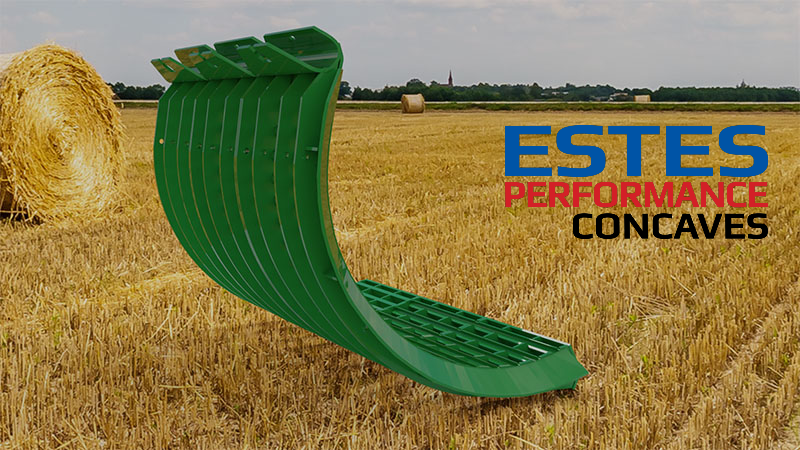
The concave is the curved grate that works in tandem with the rotor or cylinder to thresh grain from crop material. As the crop is pulled through the gap between the rotor and the concave, smaller grain particles fall through the openings while straw and chaff continue rearward.
Three variables determine how well it performs:
- Concave type — the bar design and wire configuration
- Clearance — the gap between the concave and the rotor at the pinch point
- Rotor speed — which works in direct relationship with clearance
Get any one of these wrong and you face one of two problems: unthreshed grain exiting the back of the machine, or cracked, damaged grain entering the tank. Both cost money.
The Real Cost of Downtime During Harvest
Farmers often underestimate what an unplanned stop actually costs. Consider this:
| Downtime Cause | Average Time Lost | Estimated Cost Per Hour* |
|---|---|---|
| Concave swap (crop change) | 1–3 hours | $300–$700 |
| Plugging / rotor blockage | 30–90 minutes | $300–$700 |
| Re-threshing from poor settings | Continuous loss | $50–$200/hr in grain loss |
| Cover plate adjustment | 45–60 minutes | $300–$700 |
*Based on custom harvesting rates of $25–$35/acre and typical acres-per-hour productivity.
A 2023 U.S. Public Interest Research Group report noted that farmers lose approximately $3 billion annually to tractor and combine downtime — and a significant share of that is attributable to preventable setup issues during the harvest window itself.
The 7 Main Concave Types and When to Use Them
Choosing the right concave for the crop you’re running is the single most important setup decision you’ll make. Here’s a breakdown of the most common types:
1. Round Bar Concaves
Best for: Corn (especially high-moisture), soybeans
Round bar concaves feature solid round steel cross bars with no wire. This design handles high-moisture corn at levels exceeding 25% without plugging. They excel at row crops because the bars reduce kernel-on-metal contact, lowering damage rates. Many operators near the Mississippi River region rely on round bars as their primary corn concave because of easy-threshing local varieties.
2. Small Wire Concaves
Best for: Canola, grass seed, wheat, barley, fine cereals
Small wire concaves are engineered for maximum threshing action on crops with small seed sizes. They earn “best” ratings from manufacturers for canola and grass seed specifically. However, they are not recommended for corn — the wire configuration is incompatible with larger, wetter crop material and can cause plugging or excessive grain damage.
3. Large Wire Concaves
Best for: Soybeans, corn, multi-crop transitions
Large wire concaves offer a balanced approach. They handle both row crops and small grains adequately, making them a practical choice for operations that can’t afford multiple concave swaps. Case IH recommended large wire modules in the concave area for both corn and soybeans in their flagship 30–50 series settings.
4. Hard Thresh Concaves
Best for: Spring wheat, durum wheat, winter wheat, flaxseed, alfalfa
These are engineered specifically for crops with tight husks, small seeds, or fibrous plant material that demands maximum threshing aggression. Hard thresh concaves from manufacturers like Sunnybrook are designed for heavy-duty, repeated use in challenging threshing conditions.
5. Multi-Crop / Universal Concaves
Best for: Mixed-crop operations, custom harvesters
Multi-crop concaves use variable bar spacing — tighter at the front for aggressive threshing, progressively wider toward the rear for smooth separation. Systems like the Razors Edge and Estes XPR3 are designed to handle corn, soybeans, wheat, canola, lentils, chickpeas, flax, and barley — all without cover plate changes or mid-season swaps.
6. Slotted Concaves
Best for: Crops requiring improved threshing with less chaff
Slotted concave designs improve threshing efficiency while limiting the amount of chaff that passes through, which reduces cleaning shoe load downstream.
7. Modular / Interchangeable Insert Systems
Best for: Large operations with diverse crop rotations
Modular systems allow individual concave sections to be reconfigured quickly. Inserts bolt into a frame and are reversible 180 degrees to extend service life. This design provides the flexibility of crop-specific concaves while reducing swap time to minutes rather than hours.
Concave Clearance Settings by Crop — A Practical Reference
Clearance at the pinch point is the most critical daily adjustment you make. Start with manufacturer-recommended settings and fine-tune based on field observations.
| Crop | Recommended Clearance | Rotor Speed (RPM) | Key Notes |
|---|---|---|---|
| Corn (dry) | 18–25 mm | 380–450 | Width of a corncob at pinch point; prevents tumbling |
| Corn (high moisture, >25%) | 15–22 mm | 350–400 | Open slightly; round bar concaves preferred |
| Soybeans | 15–25 mm | 350–450 | 3/4 inch at pinch point; large wire modules |
| Wheat | Narrow (tight) | Higher end | Narrow gap breaks open tough husks |
| Canola | Very tight | Moderate | Small seed; tight sieves, reduced fan speed |
| Barley | Moderate | Moderate | Hulls easily; balance threshing to prevent damage |
Pro Tip: Always re-zero your concave to the rotor before harvest starts. A rotor that has shifted position from the previous season will give you inaccurate readings from your cab indicator — and settings that look right on the display may be off by several millimetres in the field.
The 5 Most Common Concave Setup Mistakes — and How to Fix Them
Mistake 1: Running OEM Concaves Across All Crops
Standard OEM concaves are a compromise. They’re designed to work adequately across a range of crops — not optimally for any one of them. Independent PAMI testing showed that Sunnybrook’s Max Thresh concaves delivered up to 47% higher rotor capacity than OEM small wire concaves in dry canola, when extrapolated to low-loss conditions.
Fix: Evaluate aftermarket concave systems for your primary crops. The upfront cost typically pays back within one to two seasons through grain savings alone.
Mistake 2: Setting Clearance Too Wide in Corn
When clearance is too wide, corn ears tumble rather than roll through the rotor. This causes cobs to break apart, sending debris into the cleaning system and increasing sieve load significantly.
Fix: Set clearance to the thickness of a corncob at the pinch point. This causes ears to roll cleanly, reduces cob breakage, and keeps the cleaning system manageable.
Mistake 3: Increasing Rotor Speed Instead of Closing Concave
Rotor speed is often the first adjustment operators make when threshing is incomplete. It should be the last. Excessive rotor speed is the leading cause of grain damage in combines – cracked kernels, split soybeans, and fines that drop dockage grades at the elevator.
Fix: Close the concave first. Increase rotor speed only as a last resort, in small increments, while monitoring grain samples from the tank.
Mistake 4: Ignoring Moisture-Related Variation Within the Same Field
A field that tests at 18% moisture at the north end may run 22–24% at the low end near a tree line. Many operators set the machine at the start of the field and don’t adjust.
Fix: Use moisture sensors or take manual checks every 1–2 hours. In high-moisture sections, open the concave slightly and reduce rotor speed. Fine-tuning the sieve gap alone can reduce tailings by 15–20% in variable-moisture conditions.
Mistake 5: Not Checking Wear Before Harvest Starts
Worn concave bars reduce threshing efficiency and increase grain loss without the operator ever knowing. Worn or damaged sections may also increase rotor slip and create uneven crop flow.
Fix: Pre-harvest inspection of the rotor and concave for wear or damage is non-negotiable. Check bar condition, wire integrity, and mounting hardware. Replace worn sections before the season starts — not during it.
Multi-Crop Operations — Eliminating the Mid-Season Swap
For farms running two or more crop types — a common scenario across the Corn Belt, Canadian prairies, and Australian grain regions — the traditional approach of crop-specific concaves creates a recurring downtime problem. Every switch from wheat to canola, or corn to soybeans, means pulling hardware, installing cover plates, and recalibrating.
This is changing rapidly.
Variable Bar Spacing Technology
Systems like the Razors Edge Concave (Thunderstruck Ag) use a patented variable bar spacing design: tight at the front for aggressive threshing in wheat and barley, progressively wider toward the rear for airflow and separation in corn and soybeans. The result is a single setup that handles 10+ crop types with only minor rotor and fan speed adjustments.
Field testing across North America and Australia confirmed performance in wet corn, dry lentils, green-stemmed soybeans, heavy canola, and brittle wheat — without a single hardware change mid-season.
The XPR3 Platform
Estes Concaves’ XPR3 system, launched in 2024 for John Deere, Case IH, and Fendt platforms, claims up to 200% capacity increase compared to OEM systems and eliminates the need for covers, inserts, or concave changes between crops. It is also designed as an AI-compatible platform — built to interface with the autonomous combine systems entering commercial production.
Business Case: What Multi-Crop Concaves Save You
- Time per concave swap: 1–3 hours
- Swaps per season (mixed operation): 4–8
- Total downtime eliminated: 4–24 hours per season
- At $500/hr combine operating cost: $2,000–$12,000 in recovered productivity
Smart Technology and Automated Concave Management in 2025
The biggest shift in concave management isn’t hardware — it’s software.
John Deere S7 and X9 Series (2025)
John Deere’s Harvest Settings Automation, available in the Ultimate Technology Package on 2025 S7 and X9 Series combines, automatically sets concave clearance, fan speed, rotor speed, sieve clearance, and chaffer clearance based on combine model, crop type, and geolocation. Operators set acceptable limits for grain loss, foreign material, and broken grain — then the machine manages itself.
John Deere reports farmers can expect productivity gains of up to 20% and 10% less fuel with the S7 Series compared to previous models.
New Holland IntelliSense™
New Holland’s IntelliSense™ automation system, now standard on premium CR models, adjusts rotor speed, fan settings, sieve openings, and concave clearance in real-time based on crop and yield conditions. The company’s PLM Connect telematics platform adds predictive service alerts, reducing unexpected downtime during critical harvest windows.
Case IH AFS Connect
Case IH’s AFS Connect telematics system monitors machine performance and flags setting deviations before they become losses. Combine data from concave pressure, rotor load, and grain loss sensors is transmitted to mobile devices in near real-time.
What This Means for Operators
Automation doesn’t eliminate the need for operator knowledge — it amplifies it. Understanding why the machine is making the adjustments it makes is essential for overriding automation intelligently when field conditions fall outside normal parameters. Experienced operators still save up to 10% in grain loss versus novice users, even on automated platforms.
Pre-Harvest Concave Checklist
Run through this before the first load of the season:
Mechanical Inspection
- Inspect rotor bars and concave bars for wear or cracks
- Re-zero concave clearance to rotor per manufacturer manual
- Check concave mounting bolts for tightness
- Verify all wires in wire-type concaves are intact
- Remove any debris or residue from previous season
Settings Baseline
- Load crop-specific settings from manufacturer guide as starting point
- Set rotor speed at low end of recommended range
- Set concave clearance for first crop to be harvested
- Calibrate loss monitors and yield monitor
- Verify sieve and chaffer settings match crop type
First-Load Protocol
- Harvest 50–100 yards, then stop and check grain sample for cracks or unthreshed material
- Drop the pan and count loss behind the machine (target: ≤1 bu/acre)
- Adjust concave before adjusting rotor speed
- Document starting settings and adjustments for future reference
Concave Setup by Operation Type — Quick Reference
| Operation Type | Recommended Approach | Priority |
|---|---|---|
| Single-crop wheat or canola | Crop-specific hard thresh or small wire | Maximize threshing efficiency |
| Corn/soybean rotation | Large wire or round bar; multi-crop if budget allows | Minimize swap time |
| Custom harvesting (5+ crops) | Universal/multi-crop system (XPR3, Razors Edge) | Zero mid-season downtime |
| High-volume operation (5,000+ bu/day) | Aftermarket high-capacity system | Capacity and sample quality |
| Small grains with brittle straw | Small wire; tight clearance | Sample cleanliness |
Key Takeaways
The right concave setup is not a one-time decision — it’s an active management discipline across the harvest season. The principles are straightforward:
- Match concave type to crop. Don’t run a compromise setup when the right tool exists.
- Adjust clearance before rotor speed. Protect grain quality first.
- Pre-harvest inspection prevents in-season failures. Worn bars are invisible until they’re expensive.
- Multi-crop concaves pay for themselves in recovered downtime, not just grain savings.
- Automation enhances, but doesn’t replace, operator skill. Understand your settings even when the machine is setting them.
Every minute the combine sits idle during harvest is a minute that cannot be recovered. The right concave setup — selected deliberately, inspected thoroughly, and adjusted actively — is one of the most reliable ways to keep it moving.